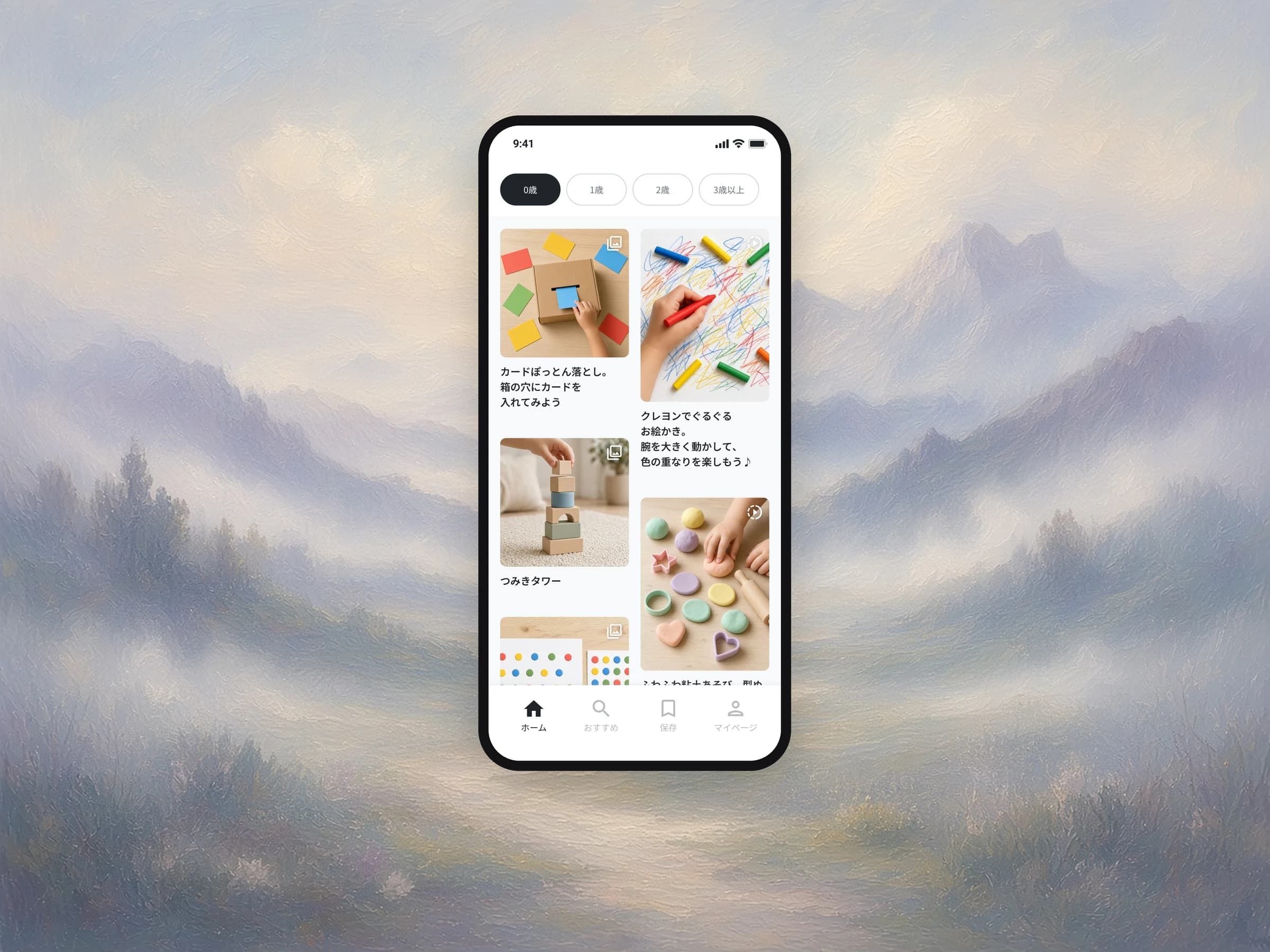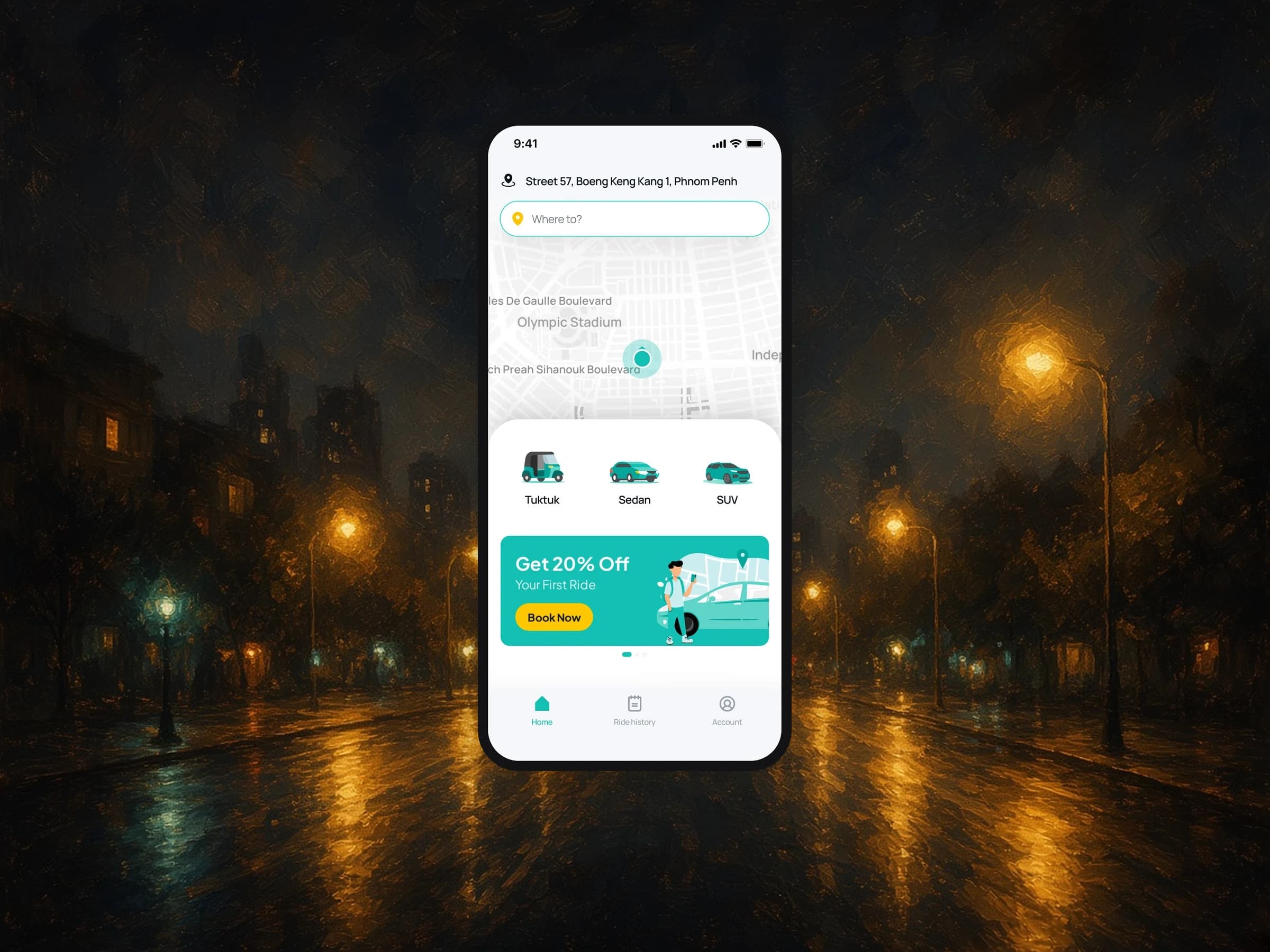
DStore
A fashion store with admin and VietQR checkout, built by one person in 60 hours.
Live, catalog pending- How did I help
- Product design
- Brand & UI
- Spec & business rules
- AI-directed build
- QA
- Role
- Design, spec, build direction
- Industry
- Fashion, e-commerce
- Team
- Just me
- Timeline
- 60 working hours
- Delivered
- Storefront, admin, checkout
- Stack
- Next.js, Supabase, PayOS
- A fashion store with its inventory admin and VietQR checkout, built by me alone in 60 working hours.
- I wrote the spec and the rules the AI agents follow, then tested every screen and flow before handover.
- The store is live at dstore.studio; the catalog waits on the client's licensing.
The tour: Spec first, then the build → The decisions that mattered → Code can't fix compliance
Small budget,
full store.
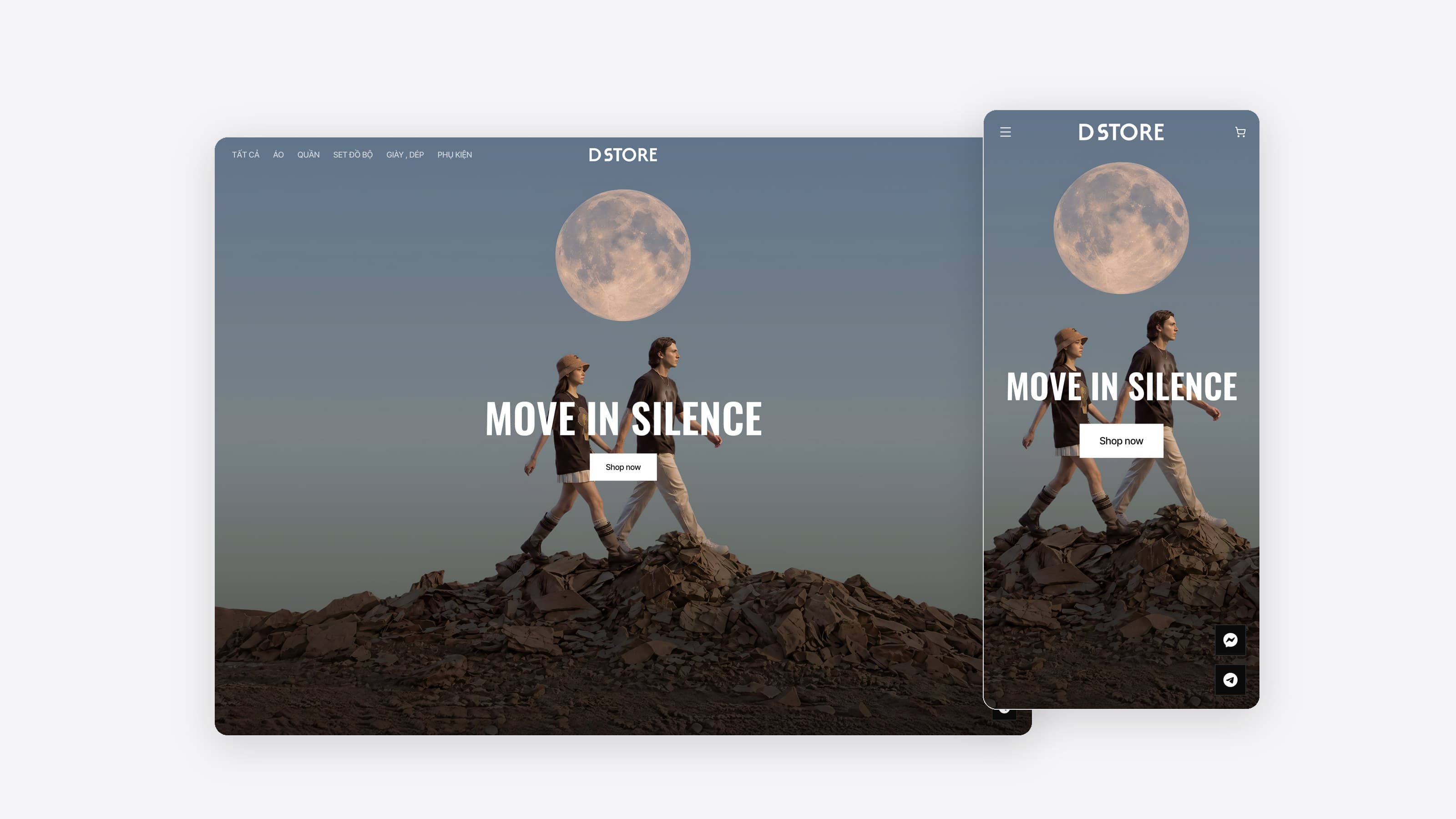
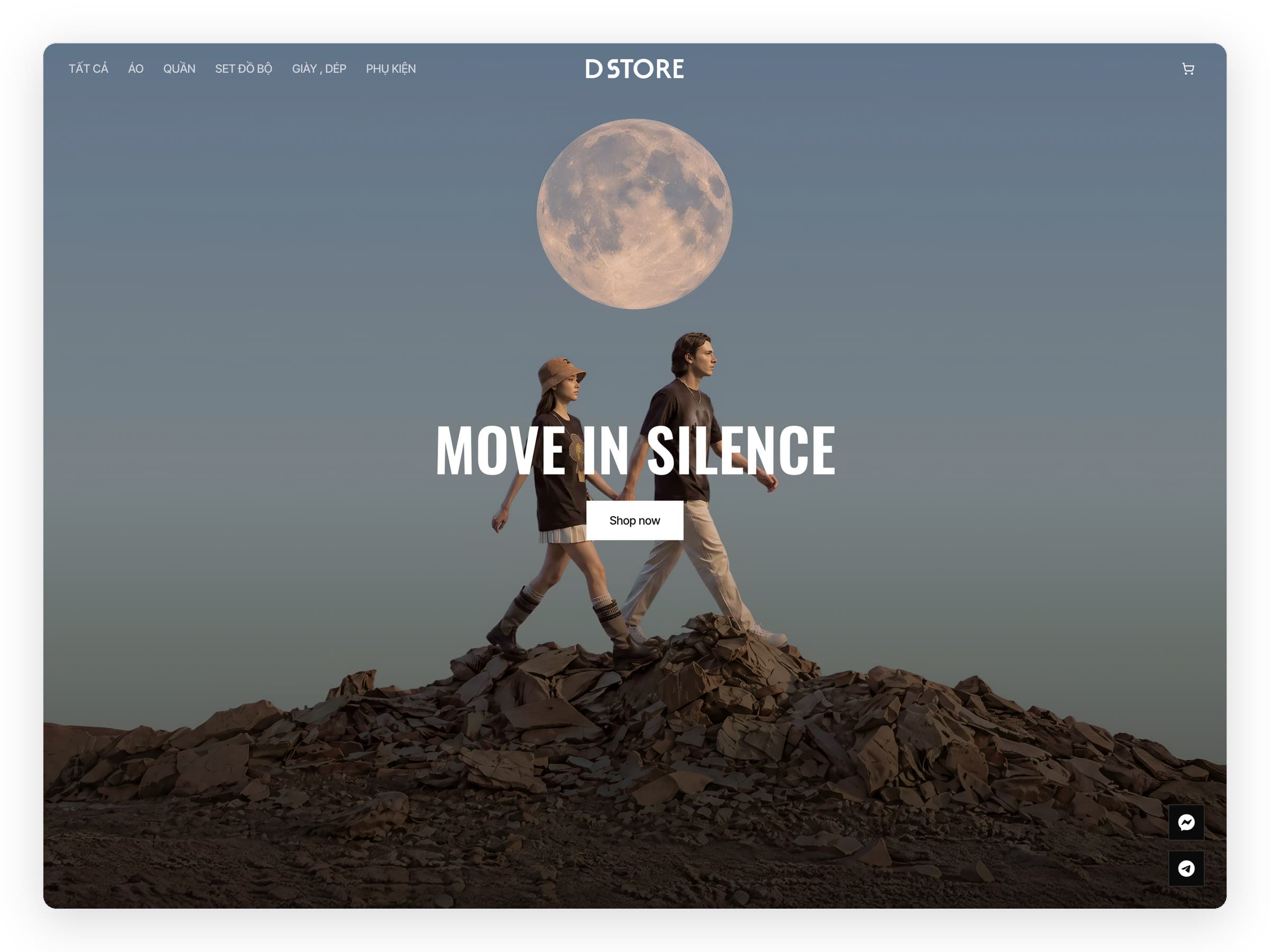
A founder with products to sell, a small budget and no team. DStore needed a storefront, an inventory admin and lookbook content, and all of it had to fit the budget.
Sell the local way,
from day one.
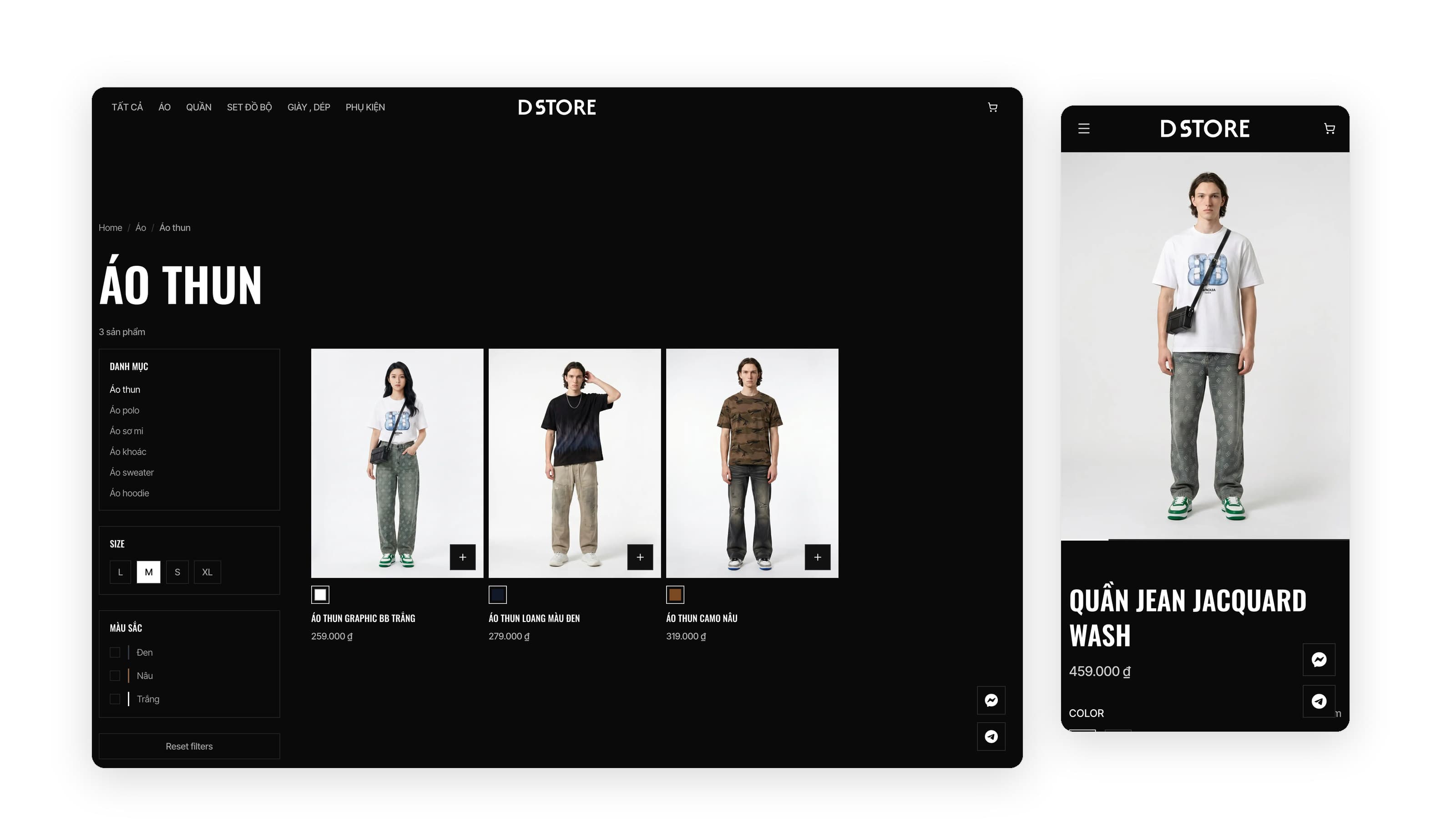
- Fit storefront and admin into a tight budget, cutting everything that wasn't needed to sell.
- Let the client make lookbook images in-house, with no money for photoshoots.
- Take payment the way shoppers in Vietnam pay: PayOS and VietQR.
Spec first,
then the build.
I write down the flows, screens and business rules before anything gets built. That document is the spec the AI agents build against, and I write the rules they follow so their output matches the spec, the design and the business logic.
Then I test every screen and flow against the spec. What fails goes back into the pipeline, gets rebuilt and is tested again until it passes. Only then does the build go to the client for acceptance.
- 01DocsFlows, screens and business rules, written first.
- 02Build pipelineThe AI agent pipeline that turns the spec into a build.
- 03Agent rulesRules that keep agent output on spec.
- 04TestEvery screen and flow against the spec.
- 05Rebuild & testWhat fails loops back until it passes.
- 06AcceptanceHandover for review and sign-off.
The decisions
that mattered.
01A custom build, not a platform. The client owns the data and can shape the store freely, with no platform subscription and no per-order platform fee. The cost: 60 hours up front, and the store needs its own upkeep. Until the catalog launches it runs on the free Vercel and Supabase tiers, so the client pays $0 a month; a weekly scheduled job keeps the free database from pausing. Hosting moves to a paid plan once orders start.
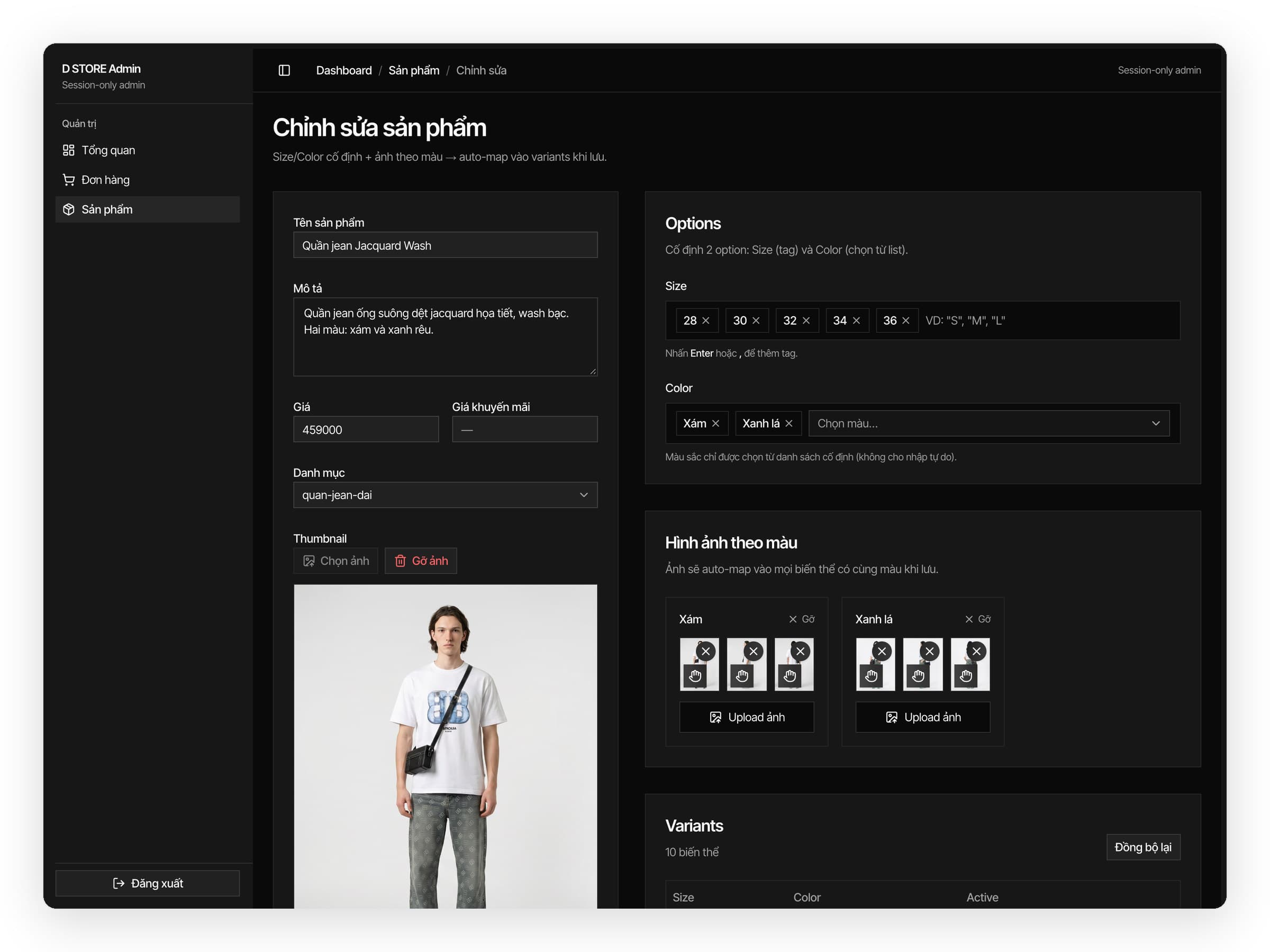
02Six admin screens, not a full back office. A full admin would not fit a 60-hour budget. Six screens cover the core inventory tasks the client needs day to day.
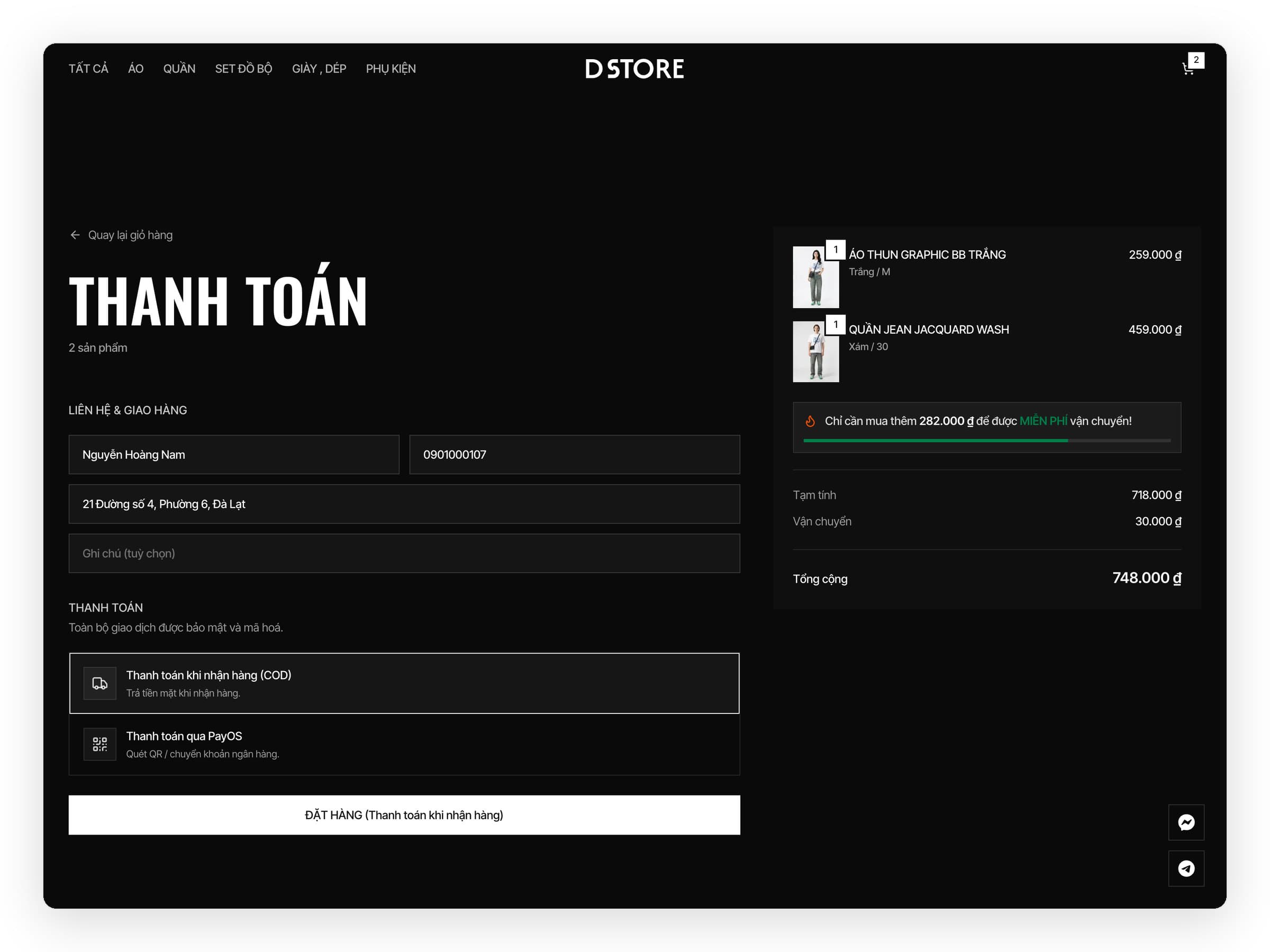
03Local payment from day one. Checkout runs on PayOS and VietQR, the way shoppers in Vietnam expect to pay.
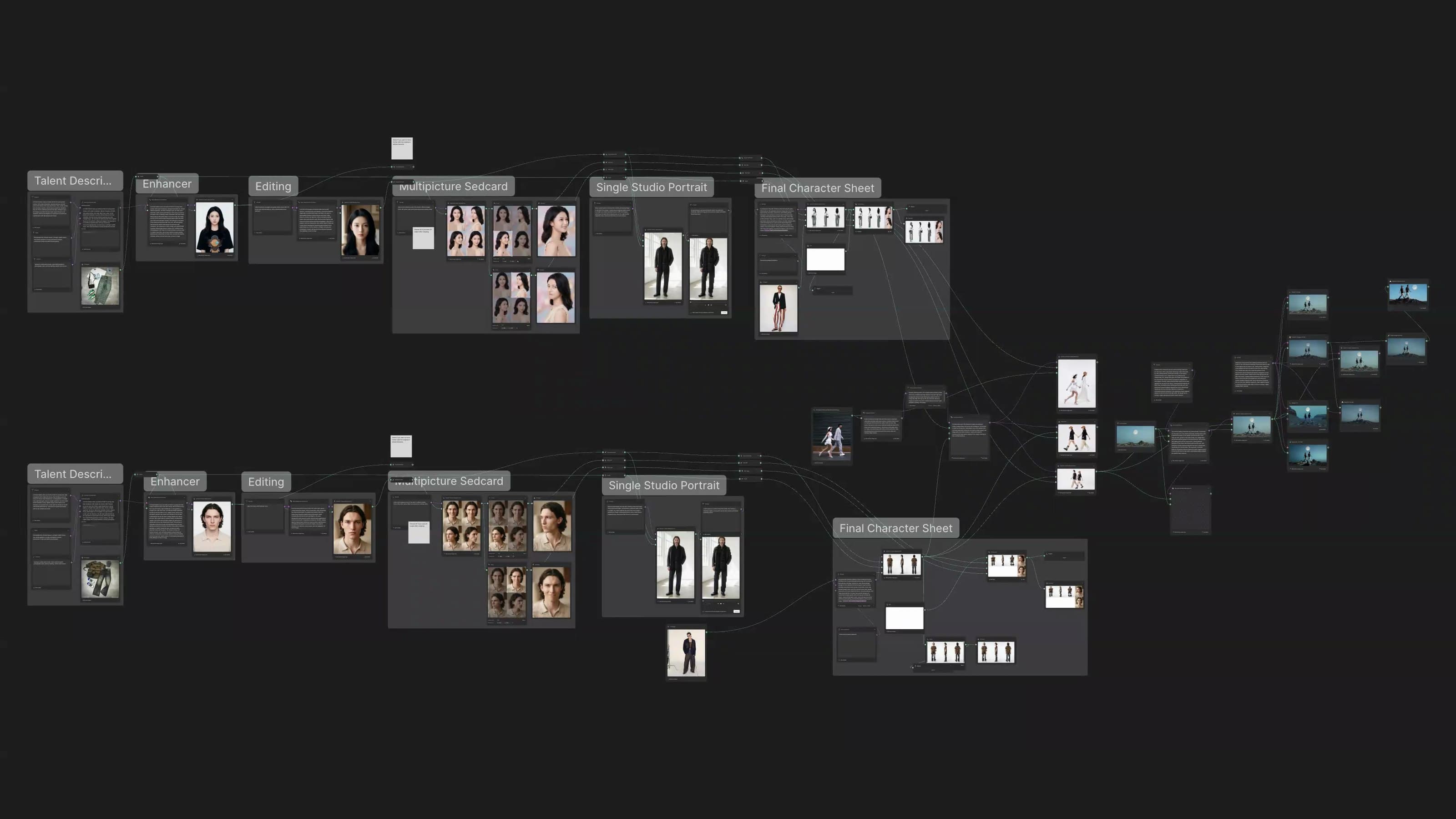
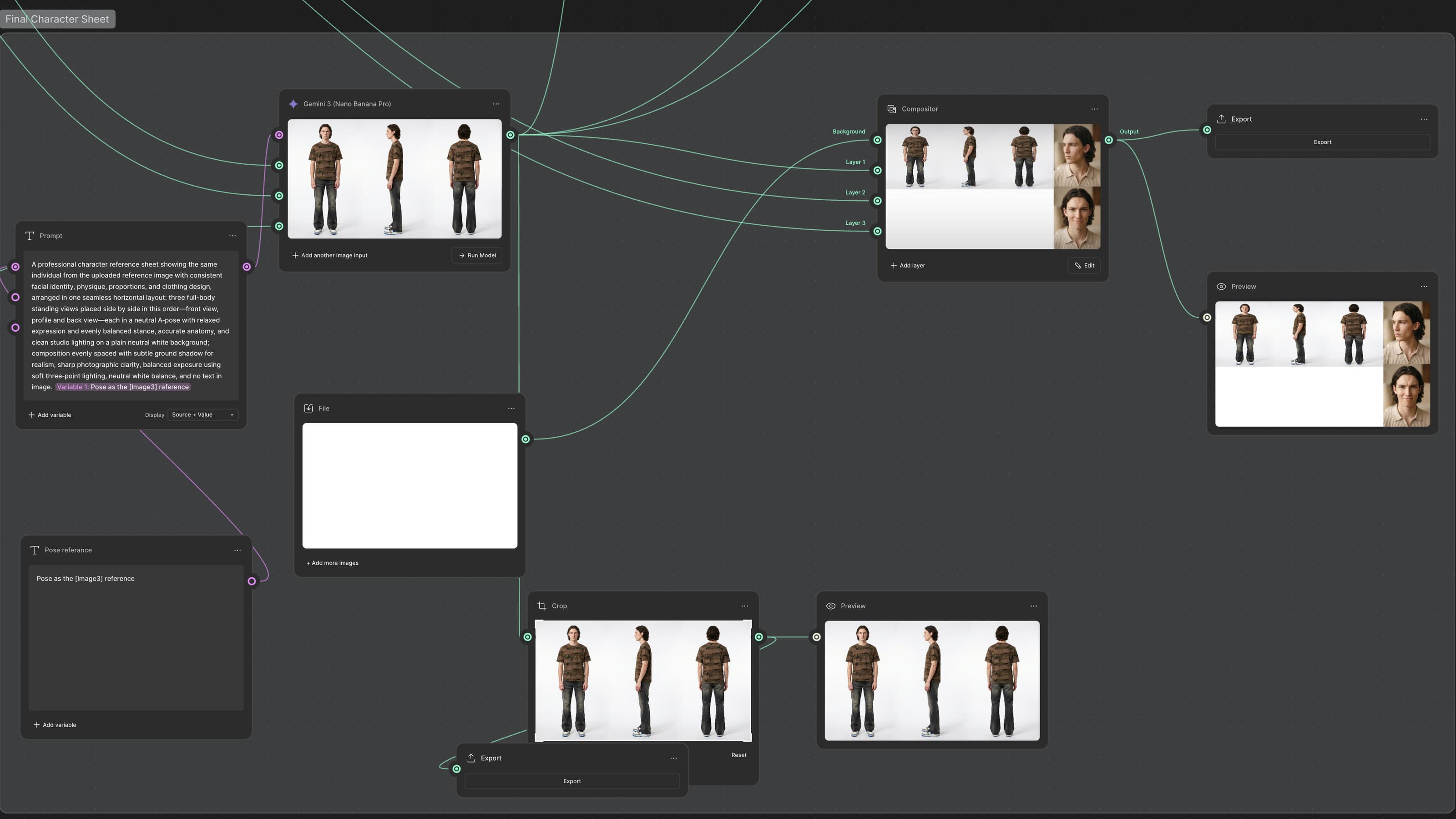
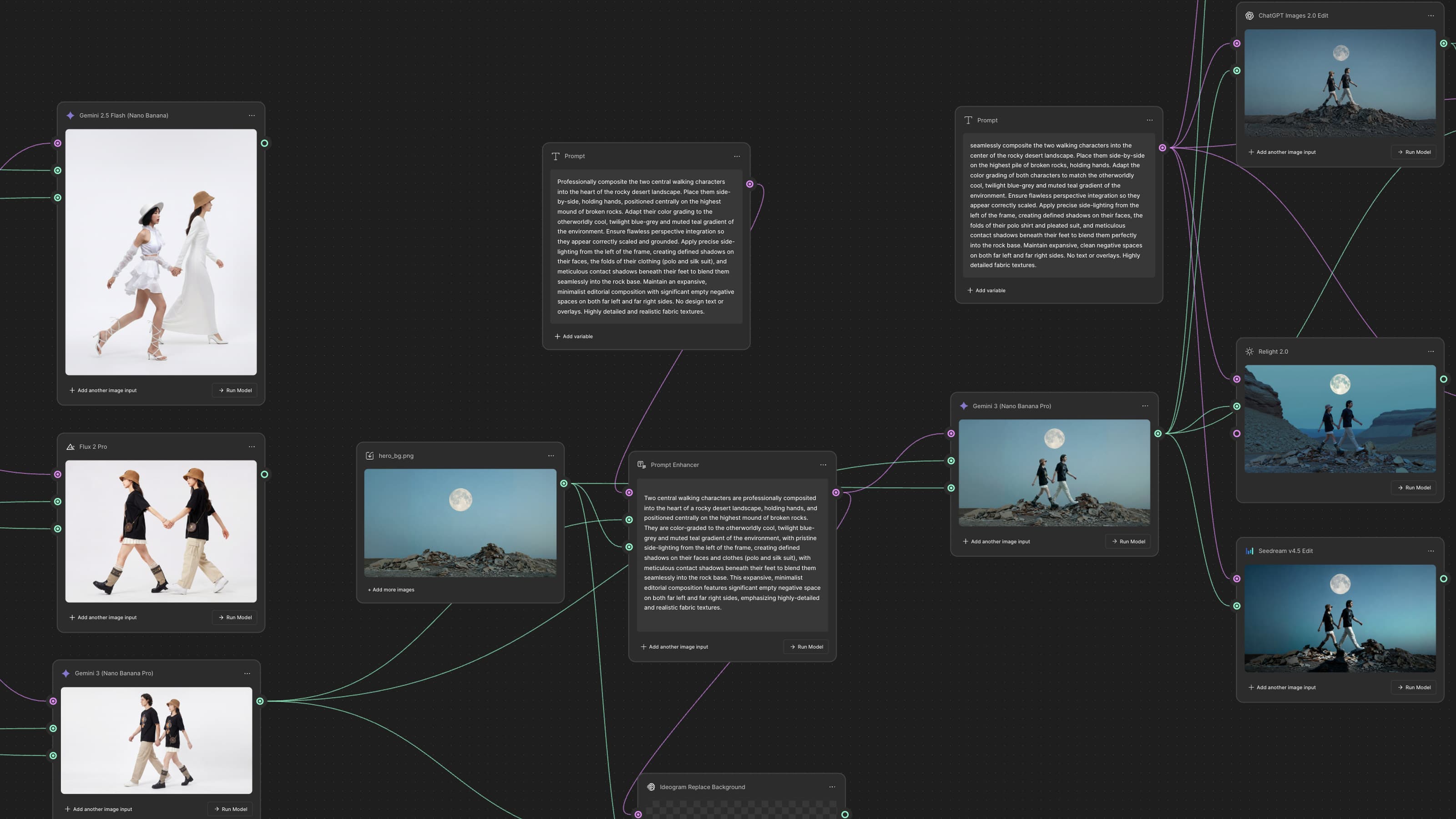
04Lookbooks without a photoshoot. A Figma Weave AI workflow turns one product photo into lookbook images, so the client makes new content without booking a shoot.
| What the store costs to run | Shopify BasicHosted platform, Vietnam pricing | Haravan Omni ProHosted platform with a web store | DStoreCustom build |
|---|---|---|---|
| Plan | $25 a month, or $19 a month paid yearly | 680,000 VND a month (promotion; listed at 1,000,000 VND) | $0 a month on the free Vercel and Supabase tiers until orders start |
| Fee on each orderOn top of the payment provider's own fee | 2%: Shopify Payments isn't offered in Vietnam, so PayOS counts as a third-party provider | None listed | None |
| Who owns the store | It runs on Shopify | It runs on Haravan | The client owns the code and the data |
Shopify Basic
Hosted platform, Vietnam pricing
- Plan
- $25 a month, or $19 a month paid yearly
- Fee on each order
- 2%: Shopify Payments isn't offered in Vietnam, so PayOS counts as a third-party provider
- Who owns the store
- It runs on Shopify
Haravan Omni Pro
Hosted platform with a web store
- Plan
- 680,000 VND a month (promotion; listed at 1,000,000 VND)
- Fee on each order
- None listed
- Who owns the store
- It runs on Haravan
DStore
Custom build
- Plan
- $0 a month on the free Vercel and Supabase tiers until orders start
- Fee on each order
- None
- Who owns the store
- The client owns the code and the data


Rules in the code,
not in a manual.
A small shop has no one to catch mistakes by hand, so the store does it. Each rule was written in the spec first, then built and tested against it.
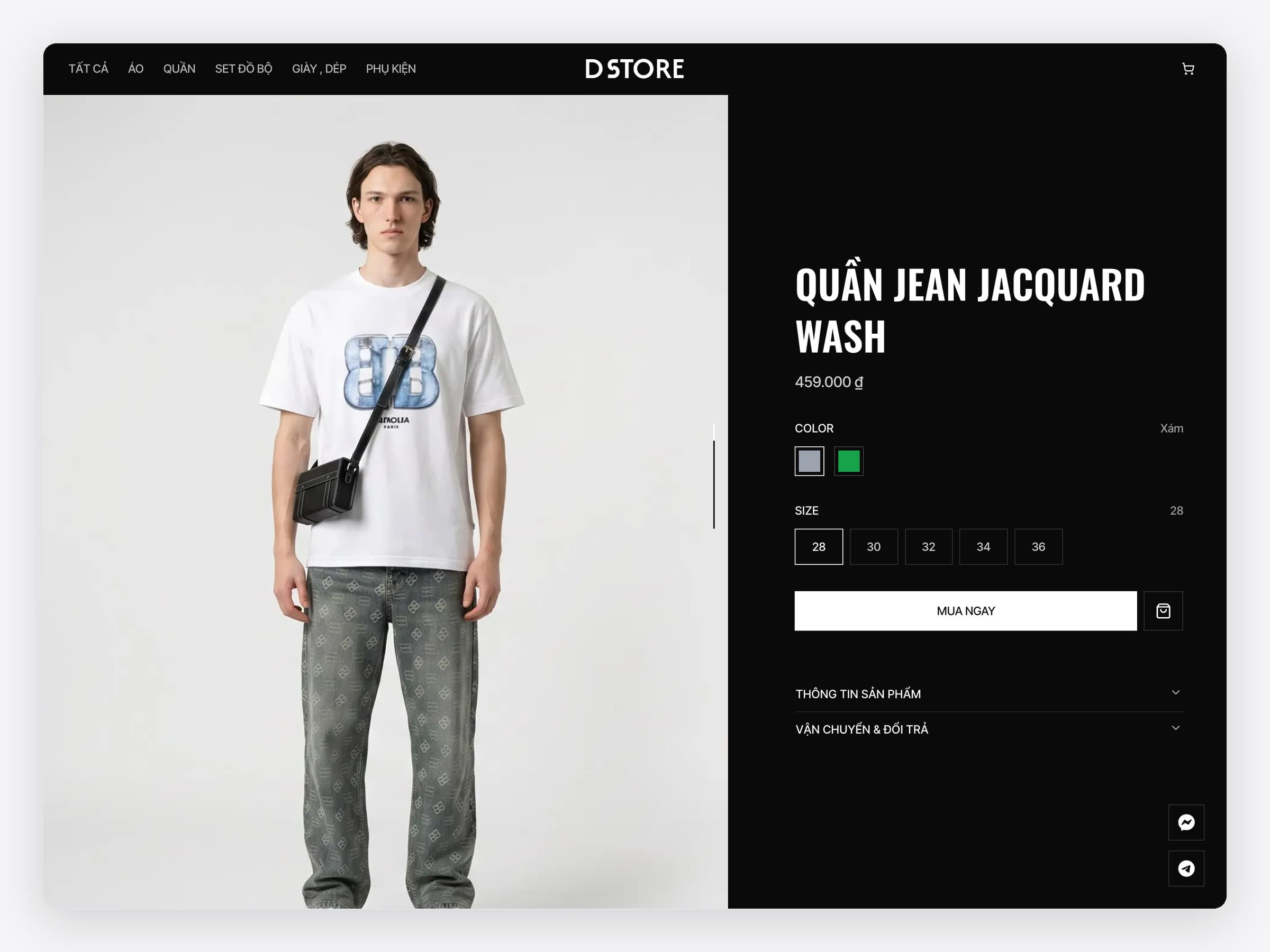
Pick a colour, see that colour
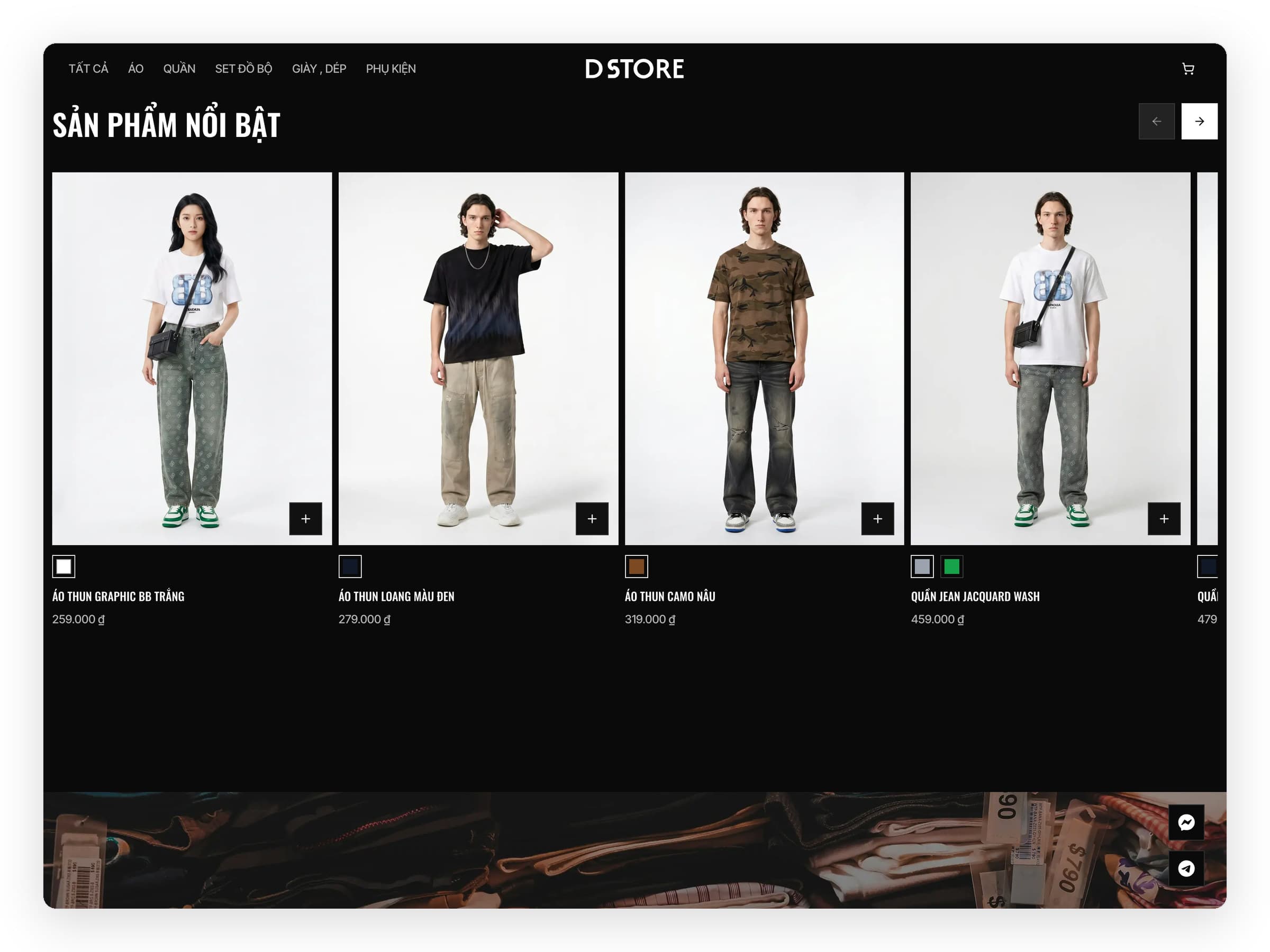
Every colour has its own photos, so tapping a colour dot swaps the main picture. A size that is sold out stays on the page, crossed out, and can't go in the cart.
- 01 / 05 · Product page · Demo data
Pick a colour, see that colour.
Every colour has its own photos, so tapping a colour dot swaps the main picture. A size that is sold out stays on the page, crossed out, and can't go in the cart.
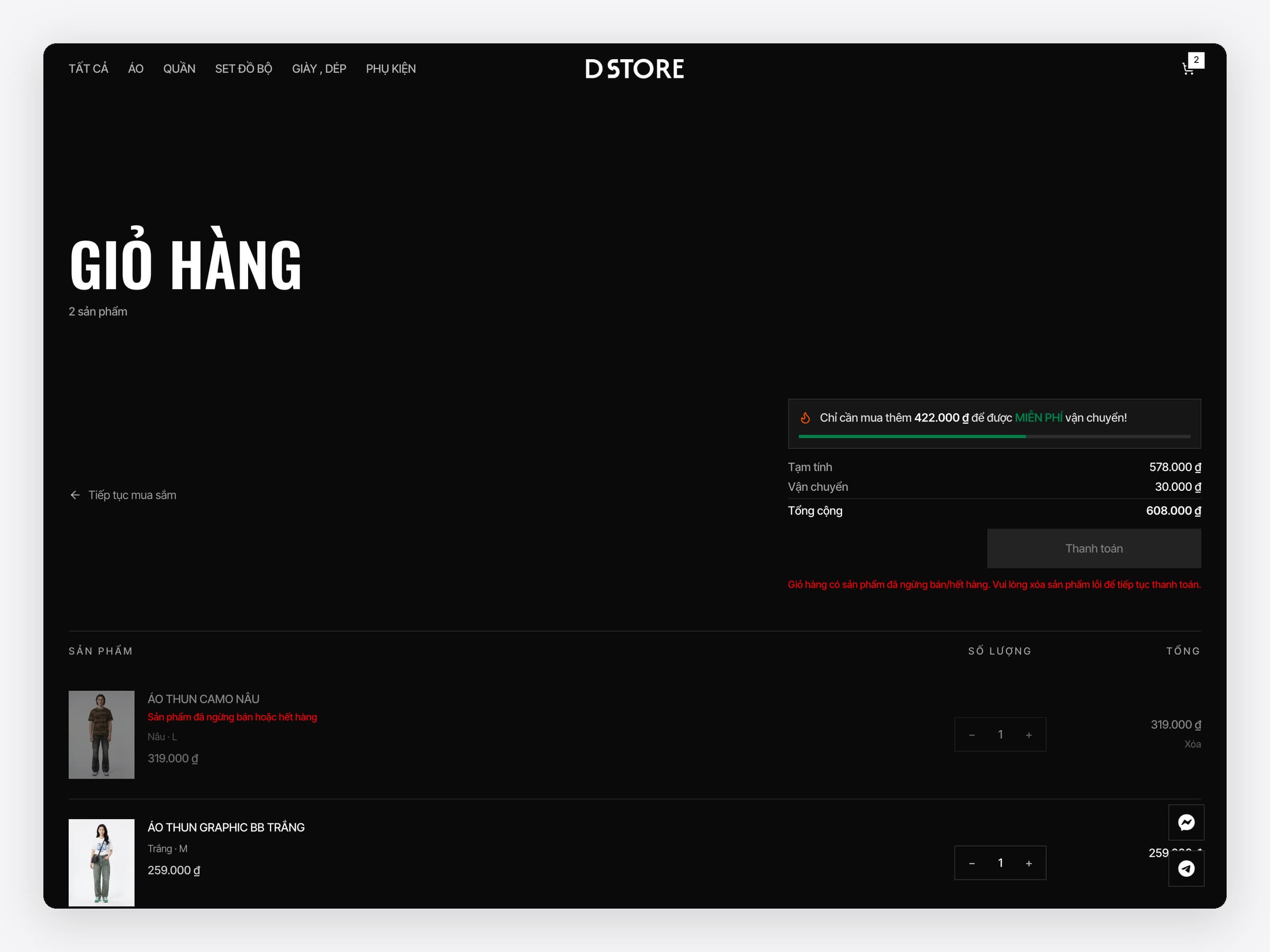 02 / 05 · Cart · Demo data
A changed cart can't check out.
The cart is kept on the shopper's phone, so a product can go off sale after it was added. The cart greys it out with a red line, keeps it, and locks payment until the shopper removes it. The server checks again before it creates a payment link.
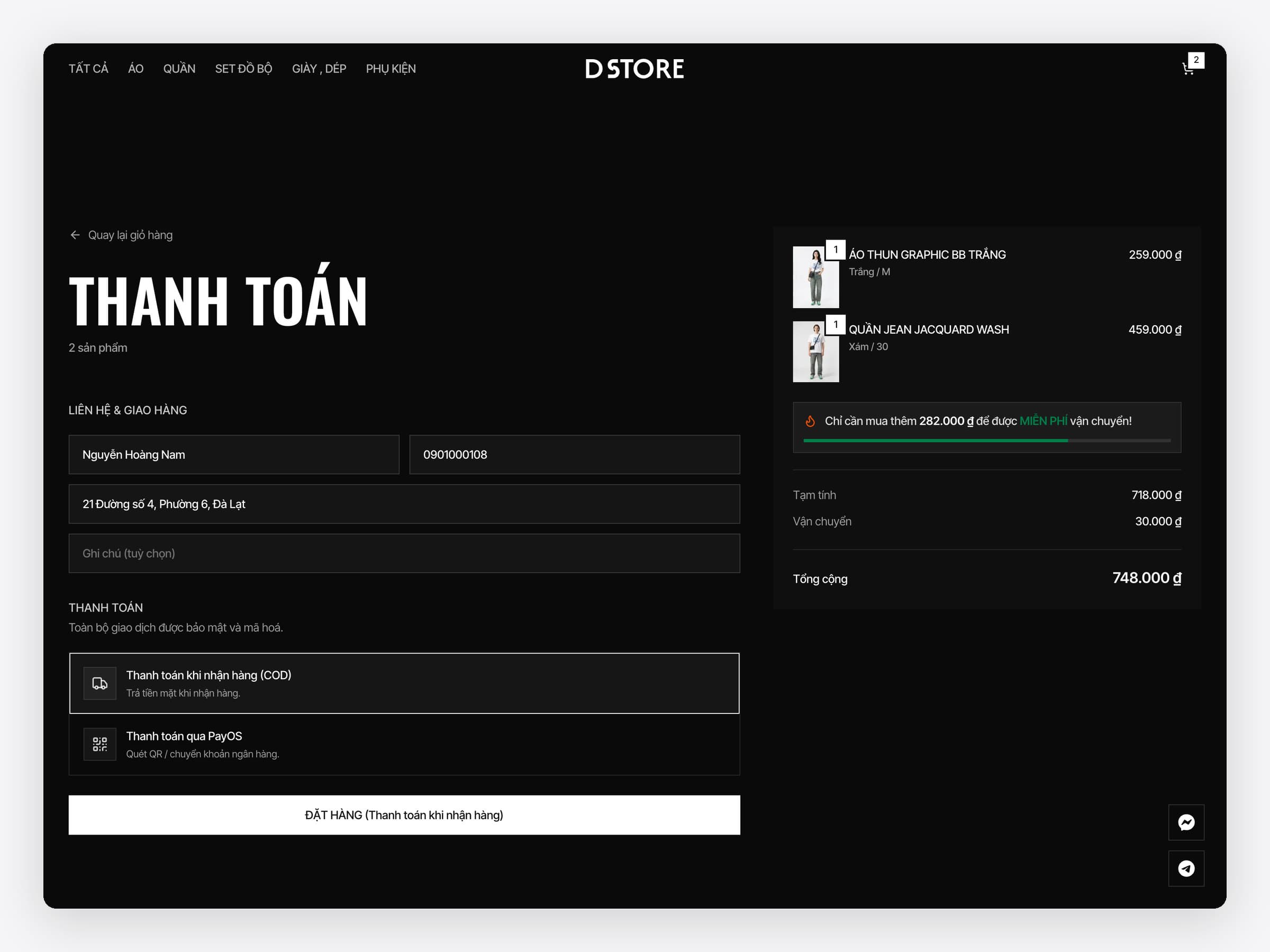 03 / 05 · Checkout · Demo data
Prices come from the database.
The browser sends only products, sizes and quantities. The server reads each price from the database, adds 30,000 VND shipping below 1,000,000 VND (free above), and keeps the price paid on every line.
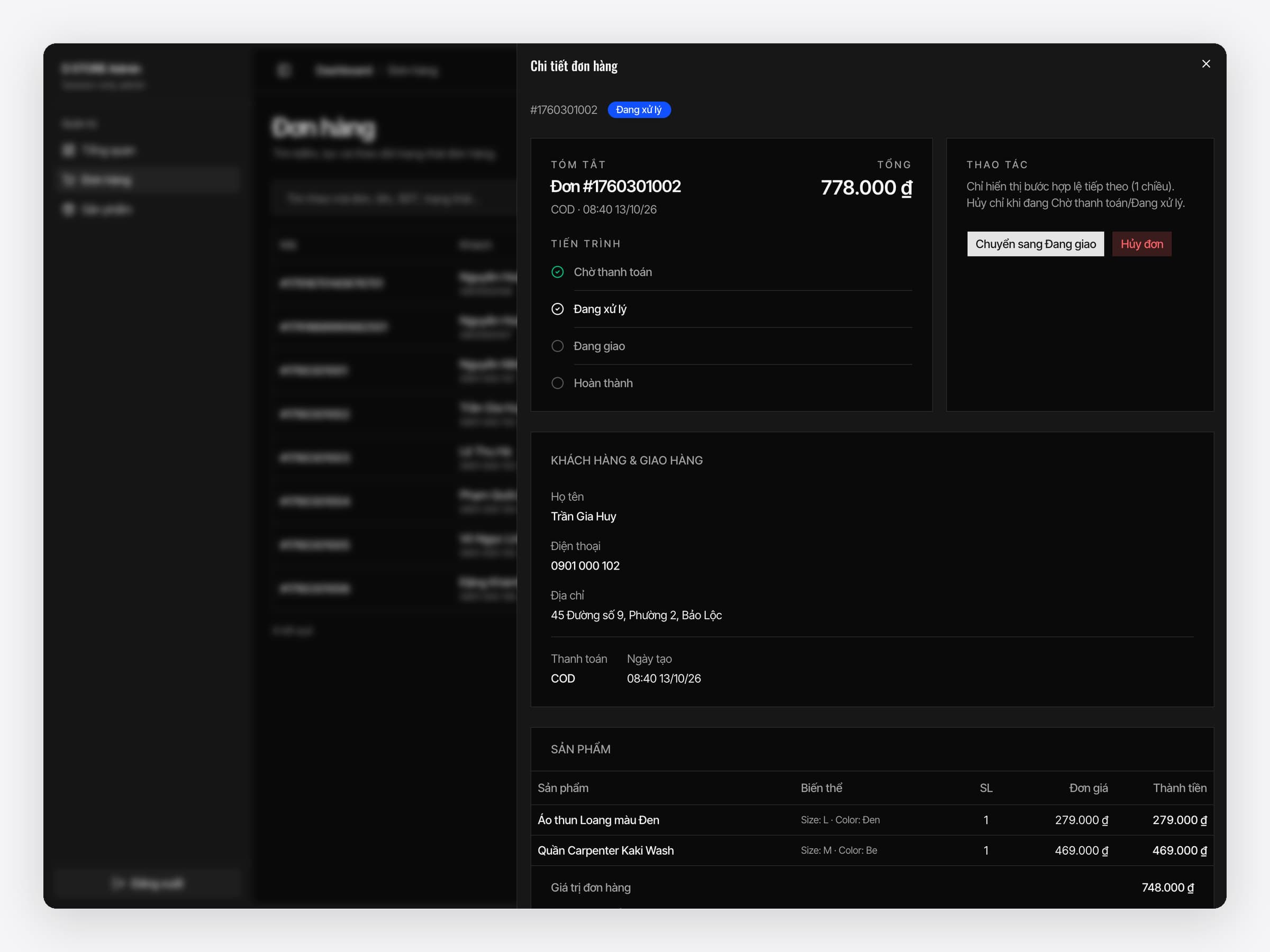 04 / 05 · Admin · Demo data
Orders only move forward.
Awaiting payment, Processing, Shipping, Completed: one step at a time, never back. Only an order awaiting payment or in processing can be cancelled.
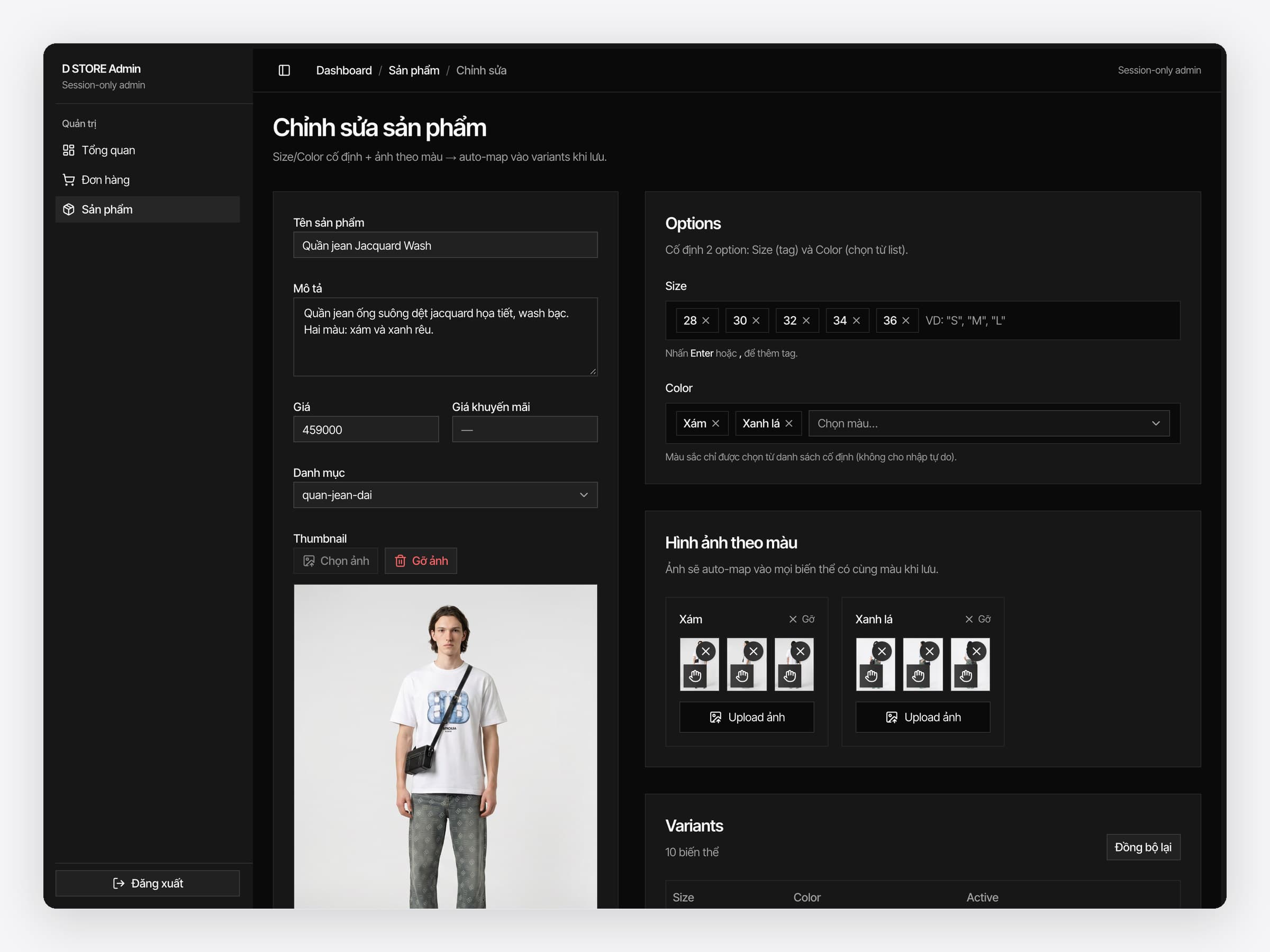 05 / 05 · Admin · Demo data
Every size in every colour.
Colours come from a fixed list, so the data stays clean; sizes are typed as tags. The admin builds every size and colour pair, each with an on/off switch.
Live,
catalog pending.
The store is live at dstore.studio. The catalog is still waiting on the client's licensing: I checked the tech constraints, not the legal ones.
Code can't fix compliance. So I check it before the first screen.
On DStore I checked the tech constraints and not the legal ones. The store is live, but the catalog is still waiting on the client's licensing. Now these questions come first on every e-commerce build.
- Is the business registered for e-commerce with the Ministry of Industry and Trade?
- Can the product sourcing pass an IP check?
- Can checkout legally take payments on launch day?